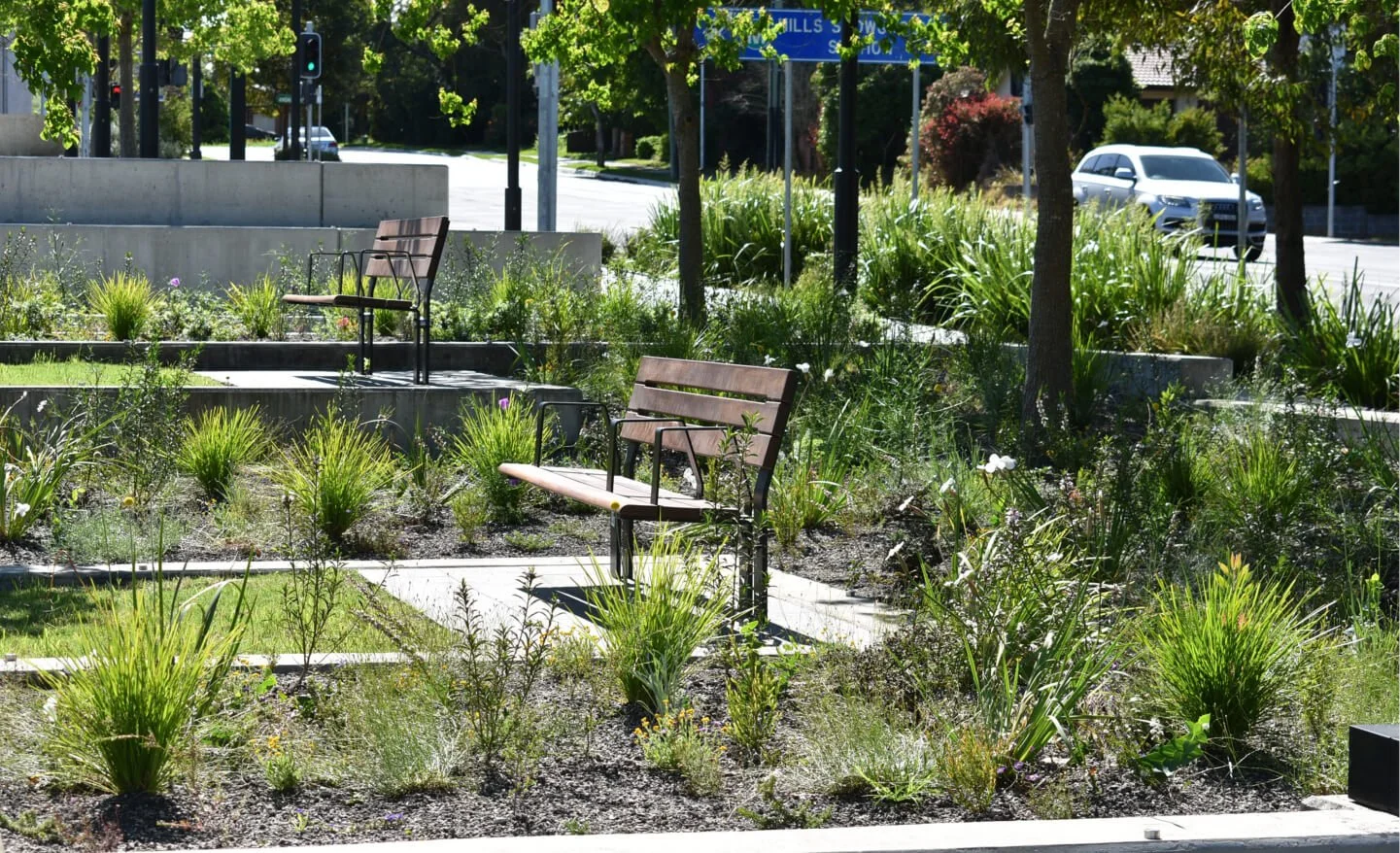
location hills showground station
collaboration sydney metro / hassell / university of melbourne
hills showground
The premise of the Sydney Metro urban planting trial was the lack of biodiversity in Sydney’s public landscapes, and specifically the Metro North West project. That, despite one of the most benign climates in the world, a generally restricted palette of readily commercially available plants and a resultant lack of urban biodiversity characterises Sydney’s designed public landscape.
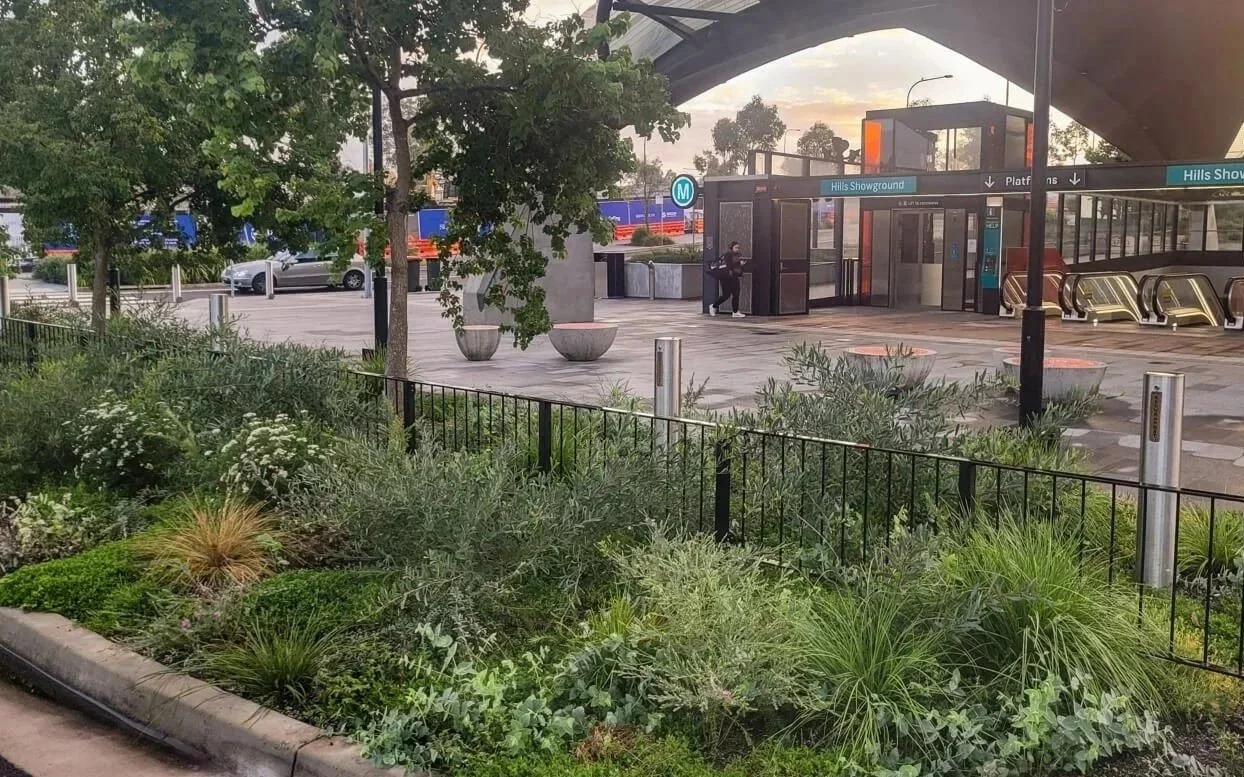
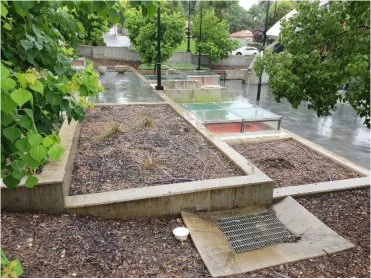
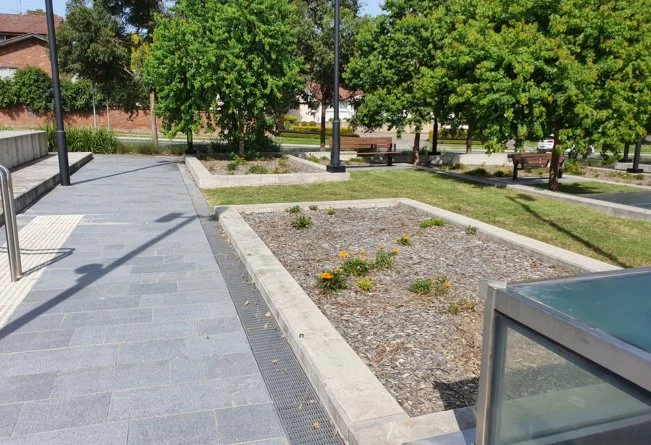
The North West project was one of the largest planting projects in Sydney in recent years, yet it lacked ambition in terms of plant selection and planting design. A mere handful of predictable and (hopefully) durable native species were planted in their tens of thousands across eight large station plazas. For a range of reasons, not least a lack of resilience in the planting mix due to its lack of variety, the ground layer planting at a number of stations largely failed. At Hills Showground station this was the case.
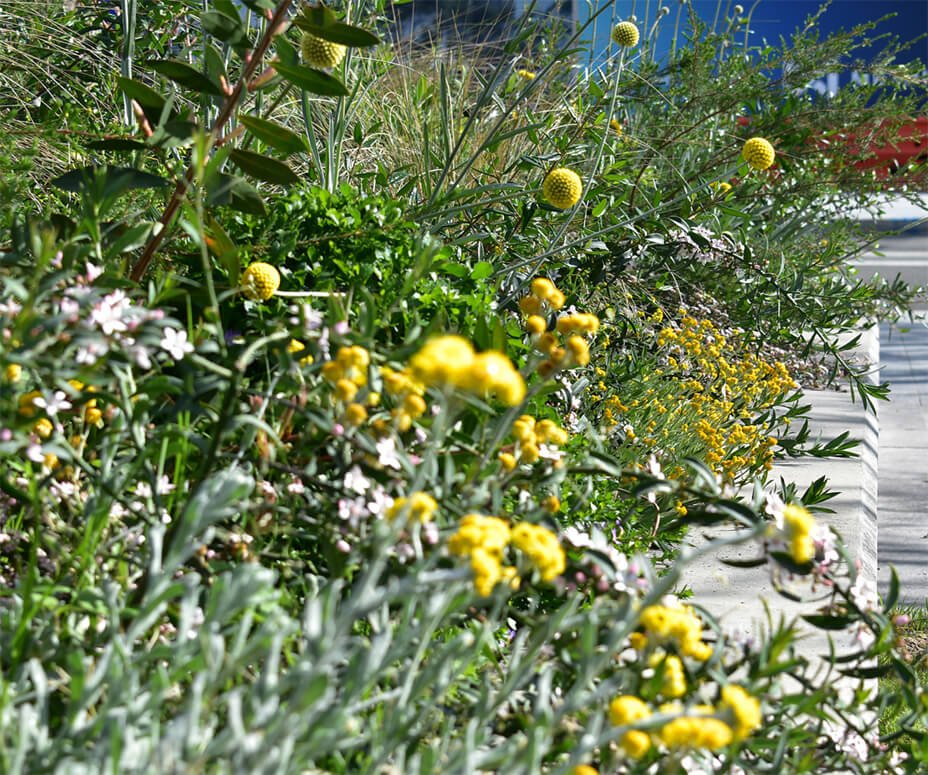
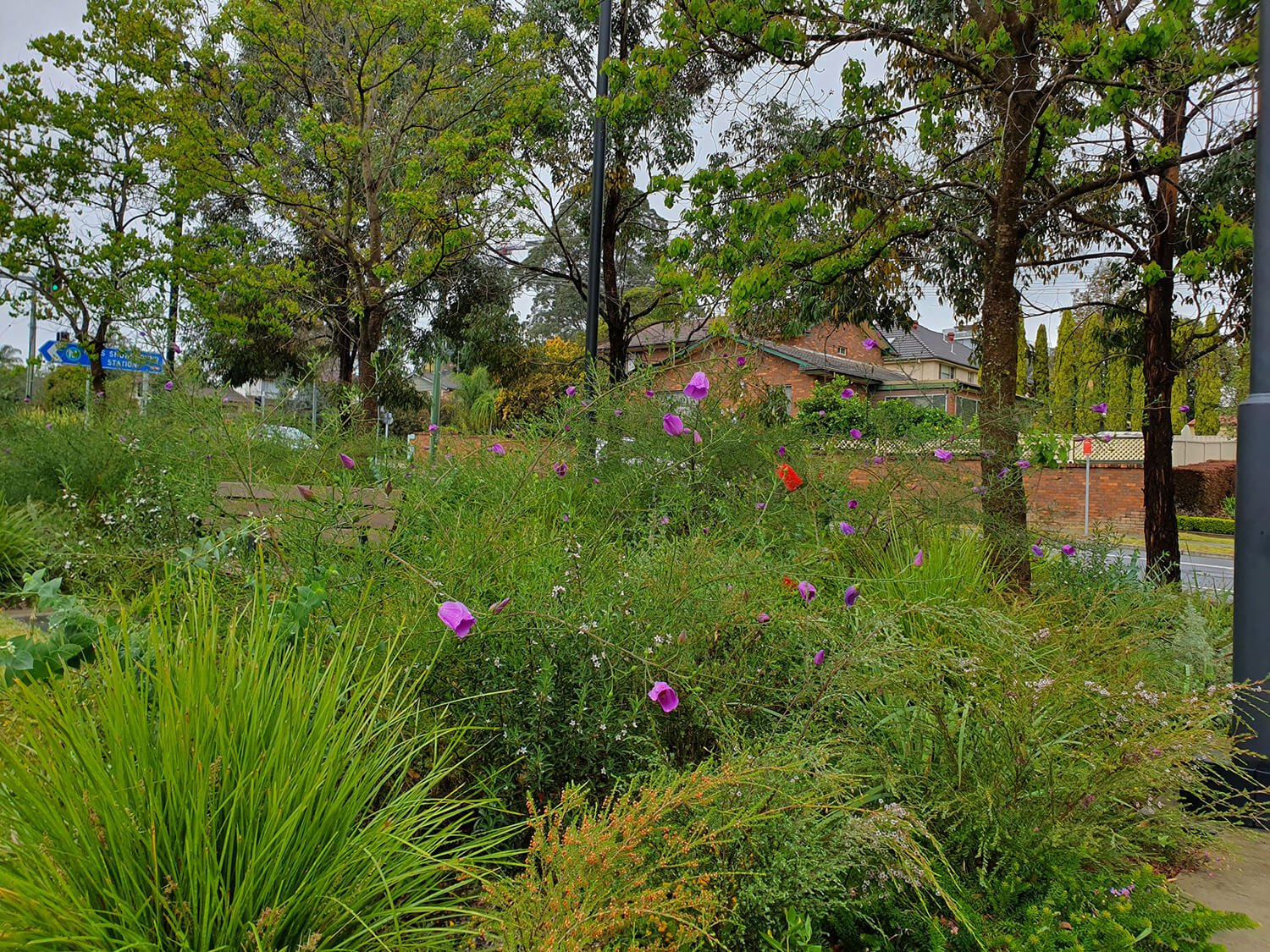
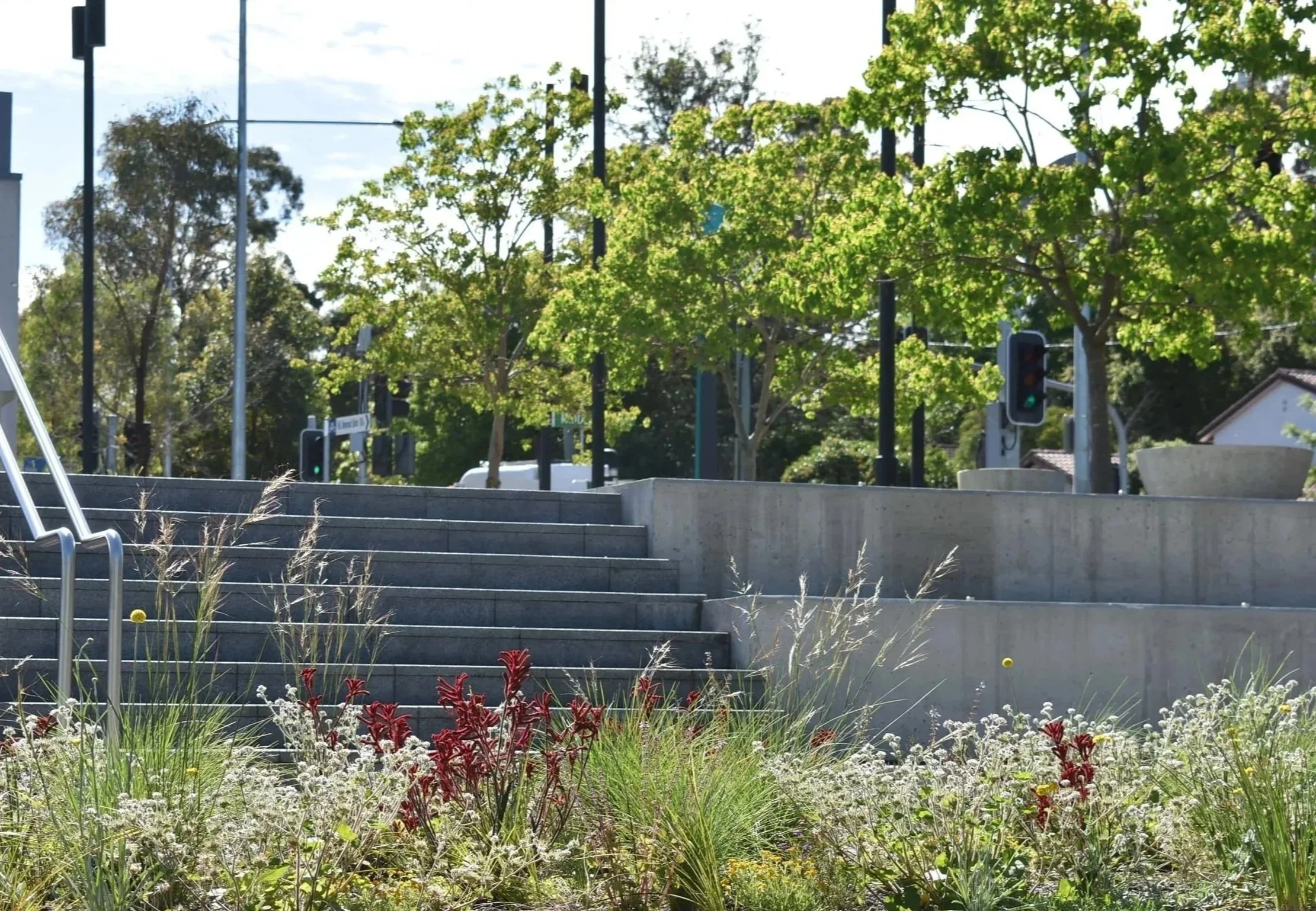
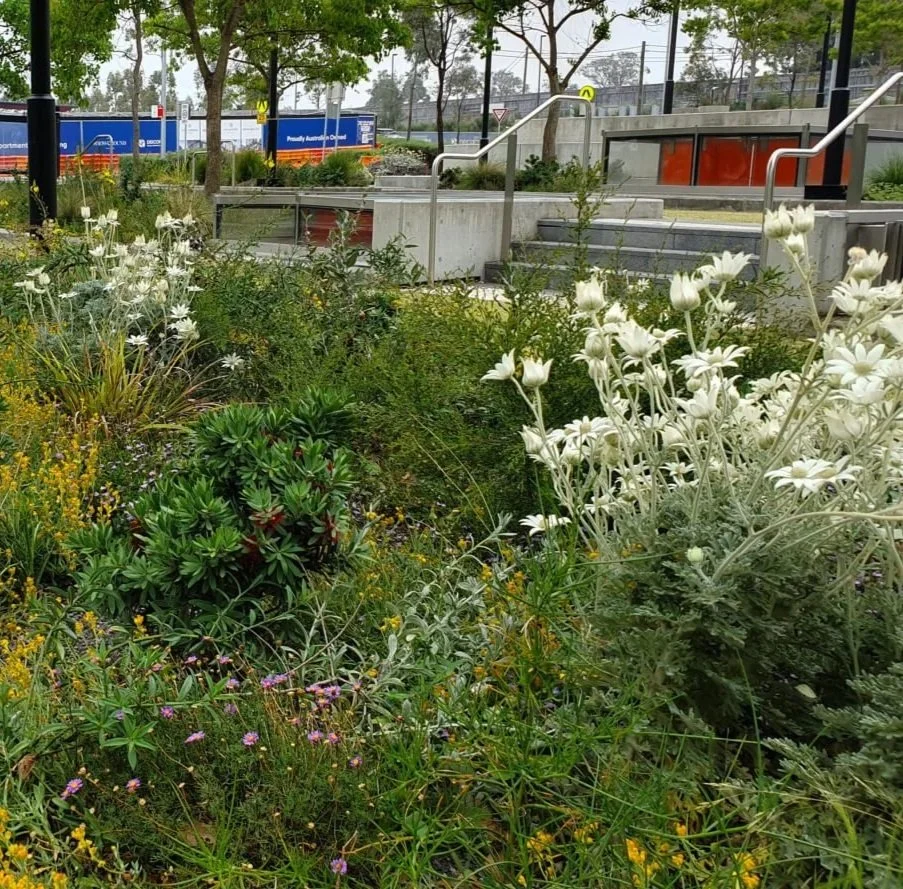
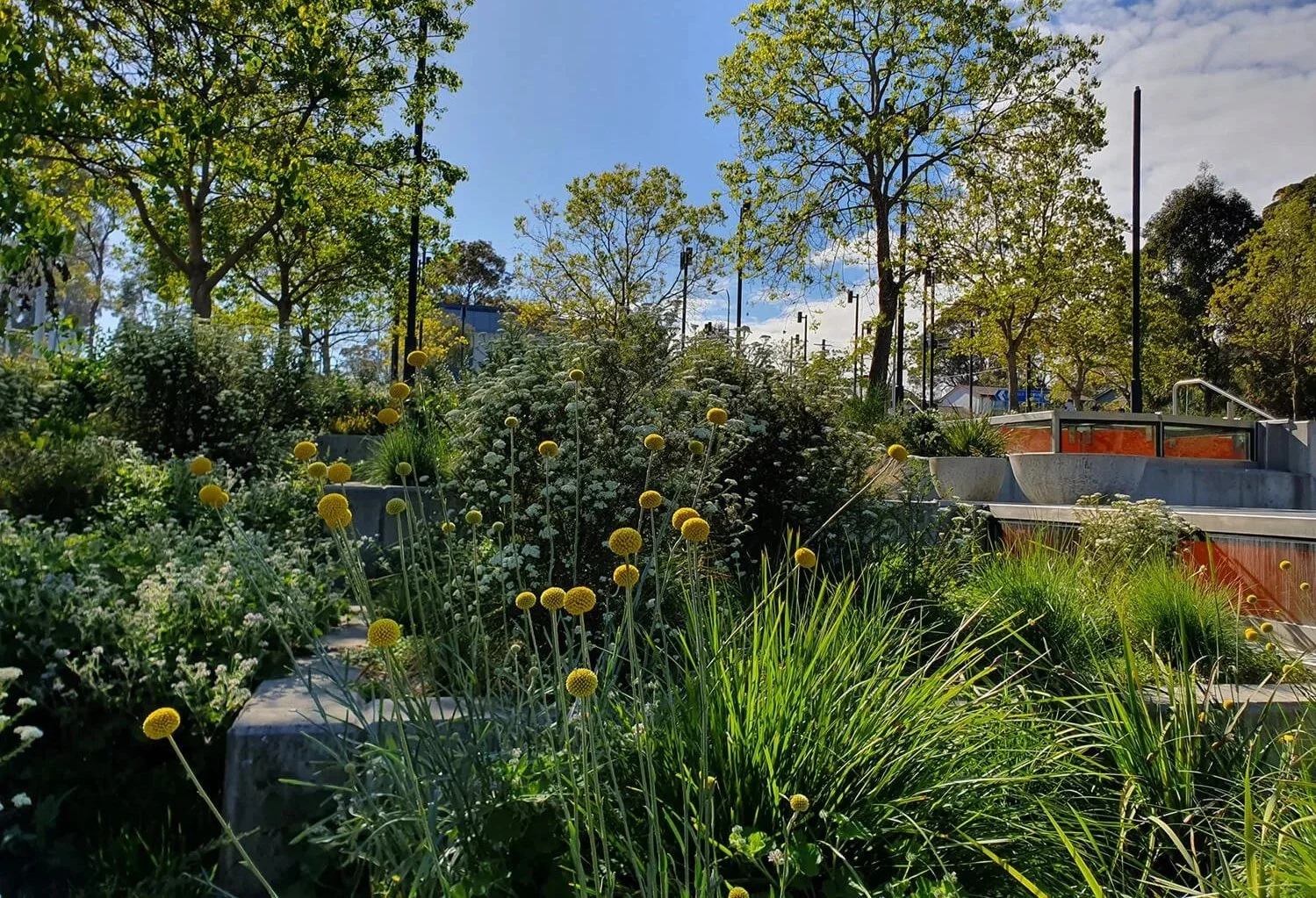
Andrew Brophy of Sydney Metro with Hassell Sydney and Claire Farrell and John Rayner of the University of Melbourne devised and implemented the trial planting of some 110 species and varieties of largely native plants, in nine different naturalistic mixes across the 32 distinct garden beds in the Hills Showground station plaza.
The approach is based on earlier University of Melbourne woody meadow trials that employed three strata of vegetation – base, middle and emergent layers – planted at high density in free-draining, low-nutrient substrate, using species that respond well to periodic hard pruning or coppicing as the primary maintenance method. In this trial, woody shrubs were supplemented with grasses and flowering perennial plants for greater floral and textural interest.
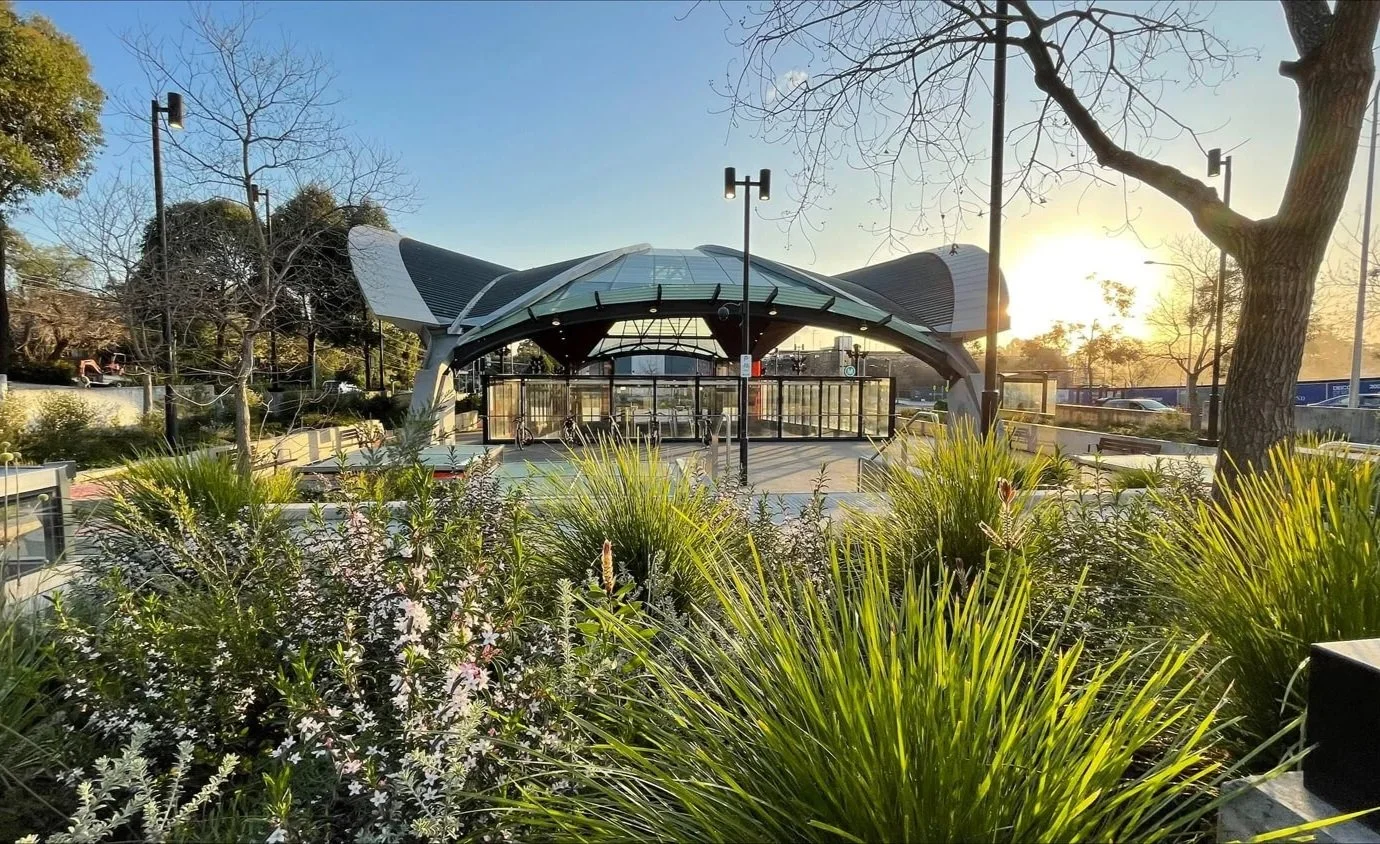
credit: jon hazlewood
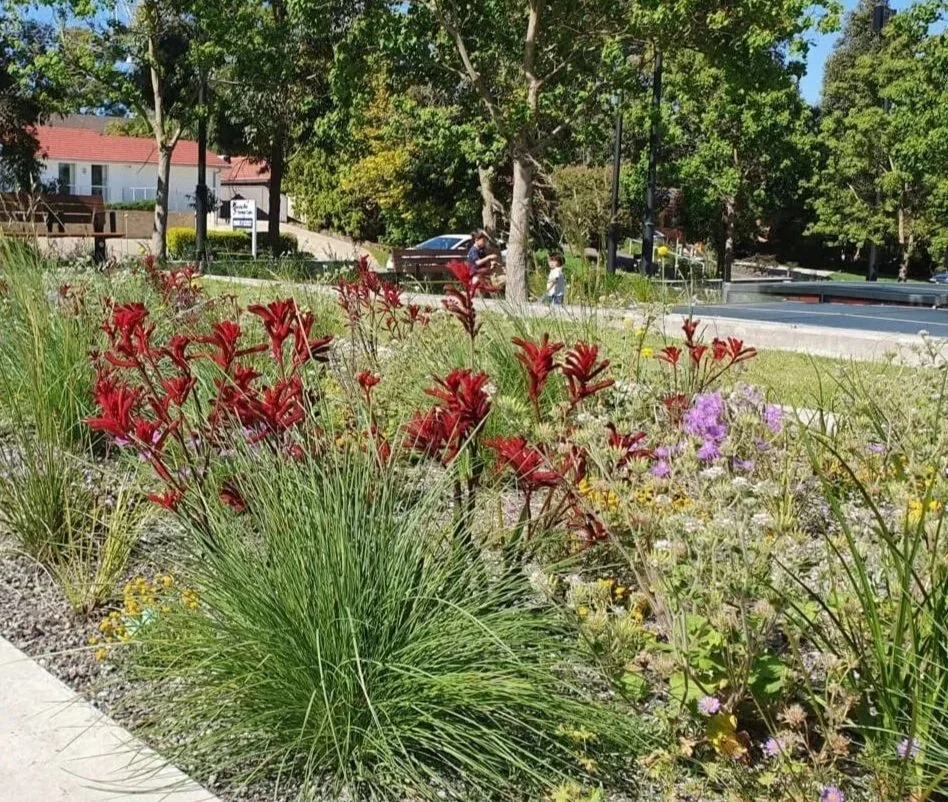
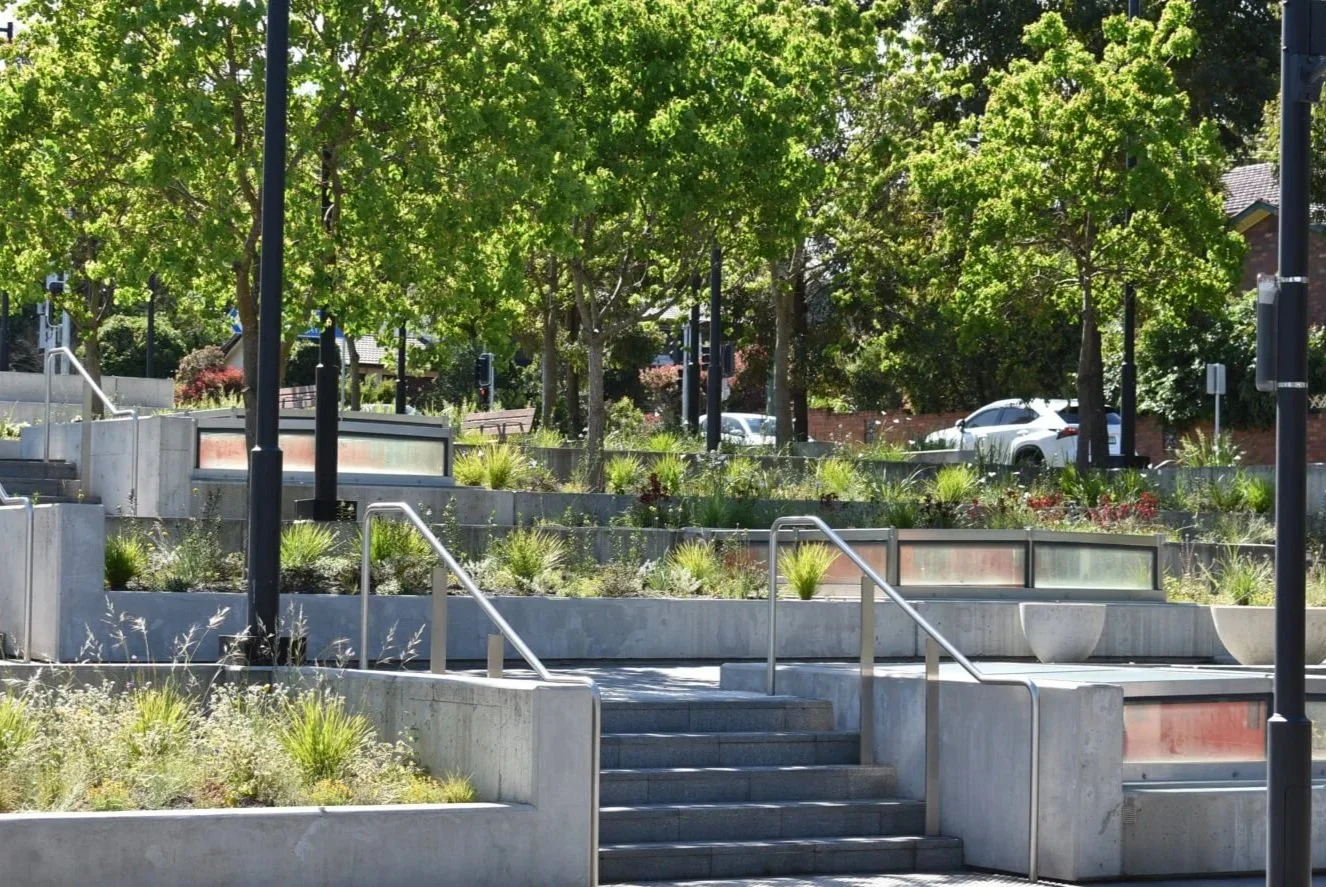
credit: jon hazlewood
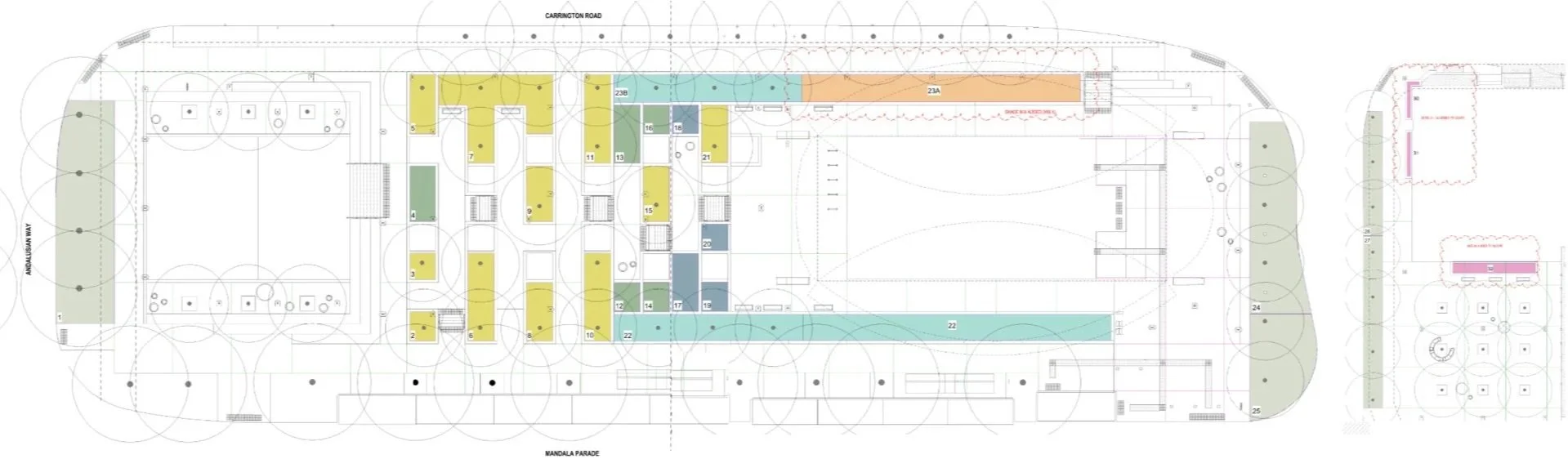
planting plan
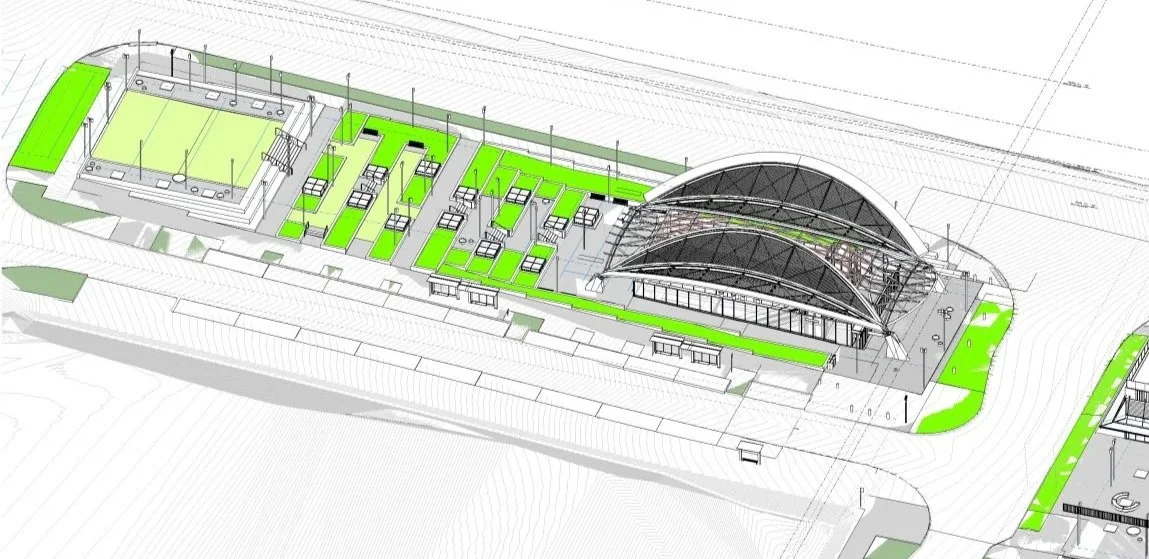
axonometric view of station
site conditions